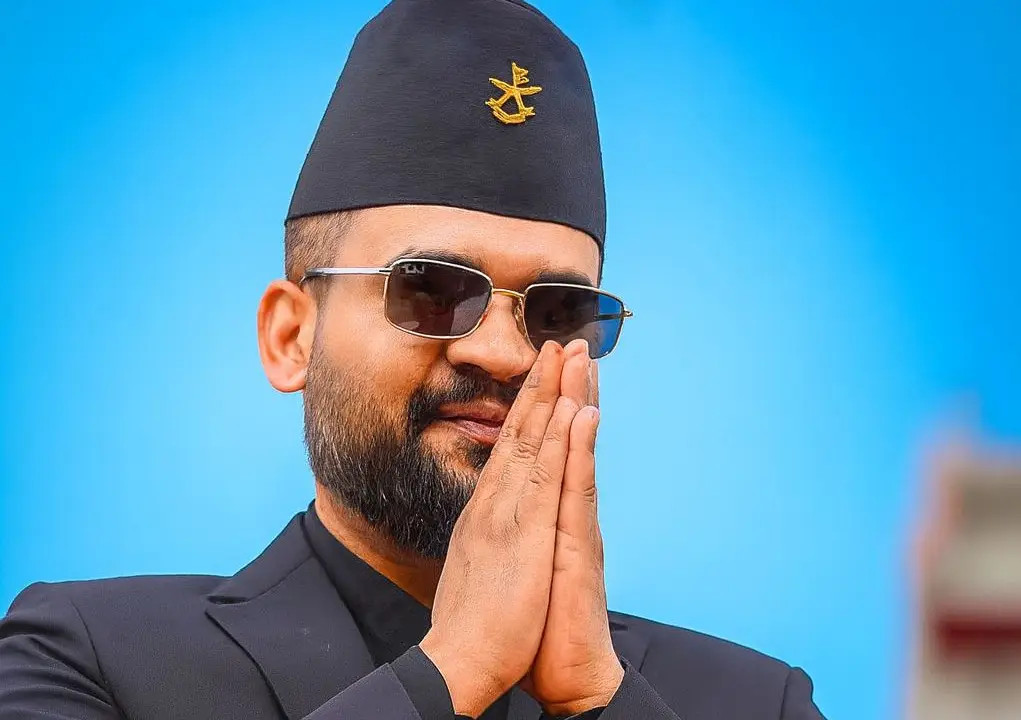








Nepal is witnessing a remarkable political transformation led by a new generation of leaders and voters. The rise of Balen Shah, widely known as a rapper, engineer, and reformist leader, has become a symbol of change in the country’s political landscape. In a recent conversation with Varun Chaudhary, Managing Director of CG Corp Global, the discussion focused on Nepal’s evolving political environment, the power of youth-driven movements, and the country’s economic future.
The interview, conducted by Gaurie Dwivedi of NDTV, explored how a youth-led political awakening—often described as a “Gen Z revolution” - has reshaped Nepal’s governance and expectations for the future.
The Rise of a Rapper-Engineer Prime Minister
Nepal’s political narrative took a dramatic turn with the rise of Balen Shah, who represents a new generation of leadership. Before entering politics, Shah was widely recognized as a civil engineer and a socially conscious rapper whose music often criticized corruption and inefficiency in governance.
His political journey gained momentum when he was elected Mayor of Kathmandu, where he built a reputation for decisive action and transparency. This credibility eventually propelled him into national leadership, making him one of Nepal’s youngest Prime Ministers.
For decades, Nepal struggled with political instability, witnessing nearly 25 government changes in just 35 years. This constant change frustrated citizens, particularly younger voters who felt traditional political parties had repeatedly failed to deliver meaningful reforms.
The emergence of Balen Shah reflects a generational shift in political participation. Young voters increasingly demanded merit-based leadership, accountability, and practical solutions, rather than ideological debates or entrenched party politics.
Economic Challenges and Nepal–India Relations
While the political momentum is significant, Nepal’s new administration faces complex economic realities. Global disruptions—such as supply chain instability and rising crude oil prices—have affected many developing economies, including Nepal.
As a landlocked country, Nepal relies heavily on India for trade routes, petroleum supply, and economic connectivity. According to Varun Chaudhary, the new government could usher in a “complete reset” in Nepal–India relations, focusing on deeper economic collaboration rather than diplomatic friction.
He emphasized the enormous investment potential Nepal holds for major Indian corporations, including Adani Group, Tata Group, and Reliance Industries.
Key sectors attracting attention include Hydropower development, Tourism infrastructure, Transportation and logistics and Large-scale energy projects.
Nepal’s vast hydropower resources, in particular, could transform the country into a major regional energy exporter if investments and policy frameworks align effectively.
Youth Aspirations and the Digital Economy
A major challenge for Nepal has been the continuous outflow of young talent seeking employment abroad. Millions of Nepali citizens work in foreign labor markets, contributing significantly to remittance-based economic growth.
However, the new leadership aims to address this by building opportunities at home. Varun Chaudhary highlighted the importance of developing sectors such as information technology, artificial intelligence, and digital services.
By promoting innovation-driven industries, Nepal could create a modern economic ecosystem that matches the ambitions of its young population.
Another major shift proposed by the government involves eliminating unnecessary intermediaries or “brokers” in international dealings. Instead, Nepal plans to establish direct institutional partnerships with foreign governments, investors, and global organizations.
Nepal as a Strategic Bridge Between India and China
Nepal’s geographic location places it between two of the world’s largest economies: India and China. While this position has historically created diplomatic complexity, it also presents strategic economic opportunities.
Chaudhary believes Nepal can serve as a bridge connecting the economic interests of both nations, facilitating trade, tourism, and regional cooperation while maintaining its sovereignty and independent foreign policy.
Balancing relationships with both neighbors will remain a critical task for Nepal’s leadership in the coming years.
Learning from Successful Nepali Enterprises
Interestingly, Prime Minister Balen Shah has often spoken about the importance of efficiency and innovation within Nepal’s private sector. During discussions about economic development, he reportedly referenced the success of Wai Wai, produced by CG Foods, as an example of how Nepali industries can build globally recognized brands.
This approach reflects a broader philosophy: strengthening local enterprises and encouraging entrepreneurial growth as key drivers of national development.
A Result-Oriented Government
The expectations placed on Nepal’s new leadership are enormous. Citizens are no longer satisfied with political rhetoric; they are demanding measurable results.
For the business community and investors, political stability, transparent governance, and efficient decision-making will be crucial for unlocking Nepal’s long-term economic potential.
While the path ahead may be challenging, many observers believe that the combination of youthful leadership, entrepreneurial spirit, and strong regional partnerships could usher Nepal into a new era of growth and opportunity.
If successful, the Gen Z-driven political transformation led by Balen Shah could become a model for democratic renewal and economic reform across South Asia.